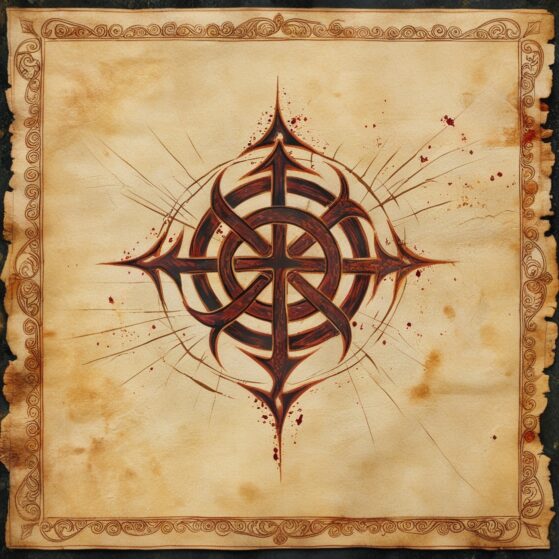
The First Transmission
Long before memory, in a place unnamed by any map, a symbol began to reappear—etched into stone, carved into wood, whispered in dreams. They called it Phrumo—a word with no clear origin, spoken in a language long forgotten, believed to be the root of all Romani dialects, and yet understood by all who hear it. It is not merely a word, but a resonance—a key, a question, a wound.
When Phrumo surfaced on the cover of an unmarked recording, archivists dismissed it as another obscure experiment. But those who listened knew better. The music was not merely composed; it was summoned. Within its sounds echoed the cries of vanished tongues, dances once stamped into dust, and celebrations held under constellations that no longer exist.
Some claim the album was encoded directly from the artifact found in the Romani caravan—now thought to be a kind of transmitter, awakened by touch, responding not to logic, but to longing. Others speak of an entity—neither human nor machine—that channels the sounds of lost tribes, forgotten gods, and unrecorded futures.
The music of Phrumo defies genre. It hums with the DNA of Balkan soil, Romani fire, and something stranger still: ghostly harmonies that shimmer like heat above desert ruins, rhythms that feel carved from tectonic plates, and tones that seem to mourn and hope in the same breath.
Each track is a fragment—a spell, a fragment of memory, a code. Together they form a map to something not yet understood. The symbol on the cover? It is said to change subtly each time it is viewed. Scholars have tried to decipher it. No one has succeeded. Some now believe it is not meant to be understood, only felt.
Phrumo is a first signal from a source that refuses to identify itself.
Let it guide you where words cannot.