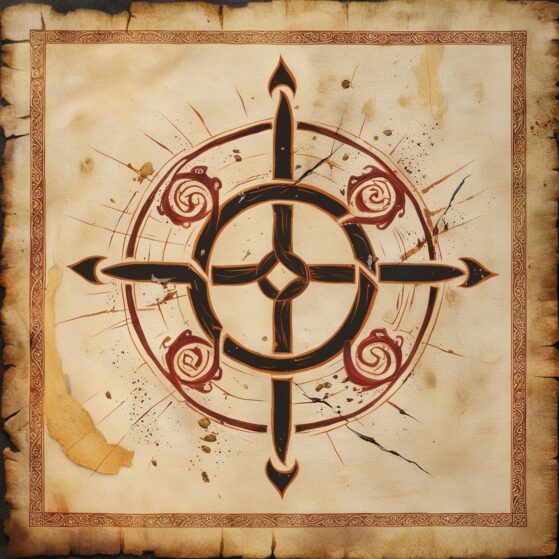
The Sixth Transformation
Six points. Six spokes. A wheel that no longer turns, but hovers. Šesto is not movement—it is suspension.
Where Panjto offered resonance and a glimpse of form, Šesto holds its breath. It is the sound of two forces circling one another in silence, neither yielding. Not conflict, but coexistence. Tension as structure. Dissonance as balance.
The symbol this time does not pulse, or shine, or vanish. It simply is. It divides and binds in the same gesture. Mystics who have studied it call it indecipherable. Listeners describe it as the shape of something they once knew, long before they had words.
The music of Šesto reflects this paradox. Percussion becomes architecture. Harmonies fracture, then recombine like shifting glass. You hear melody—but it’s unclear if it leads anywhere. You feel rhythm—but its center always escapes you. The familiar Balkan and Romani ghosts remain, but now they walk a labyrinth with no exit.
This is not collapse. This is containment. A moment caught between silence and explosion.
And yet… Somehow, through the stillness, comes clarity. In the tension, a strange peace.
Šesto does not explain itself. It doesn’t need to. It exists at the heart of the spiral—where time no longer turns, and sound becomes sacred.